
Loading...
Palm Desert Insulation serves Coachella homeowners with blown-in attic insulation, spray foam, and air sealing. We have completed insulation projects across Coachella, CA and respond to new requests within 1 business day.
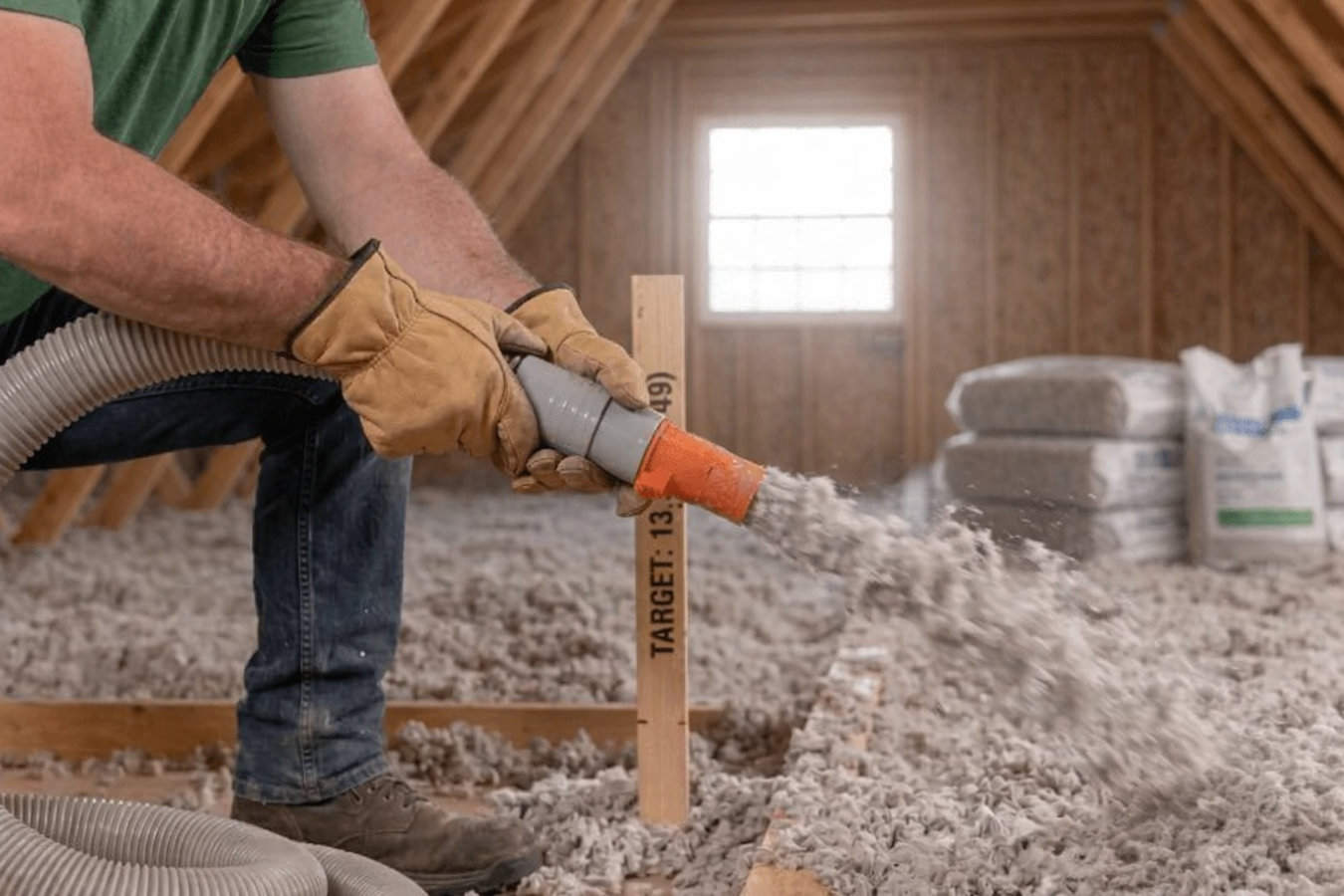
Most Coachella homes built in the 1970s and 1980s still have their original attic insulation, which has settled and thinned under decades of desert heat cycling. Our blown-in insulation service fills every corner of the attic floor evenly, covering gaps that older batts leave behind and delivering the continuous coverage older homes need most.
Coachella sits at the eastern end of the valley where summer temperatures regularly hit 110 degrees or above, and an under-insulated attic is the primary reason so many homes here never fully cool down. Adding the right depth of attic insulation directly reduces how hard your AC works during the hottest part of the day.
Flat and low-slope roofs are standard across Coachella neighborhoods, and they create a direct heat path from the roof deck into the living space with very little space to intercept it. Spray foam applied to the underside of the roof deck seals and insulates in a single pass, which is the most effective approach for this type of desert construction.
Coachella experiences strong seasonal winds that push fine desert dust through every unsealed gap in an attic or wall assembly. Sealing those gaps before any insulation goes in keeps hot outside air from bypassing your insulation entirely - and it noticeably reduces how much dust settles indoors during spring windstorms.
Homes built in Coachella during the 1970s and 1980s often have original insulation that has degraded, compressed, or been contaminated by rodent activity over decades. Removing the old material before adding new insulation gives you a clean starting point and ensures the replacement layer performs the way it should from day one.
Coachella sits at the far eastern end of the Coachella Valley, where the summer heat is among the most intense in the continental United States. Temperatures regularly exceed 110 degrees Fahrenheit from June through September, and the attic in an under-insulated home can climb well past 150 degrees on a peak afternoon. The bulk of Coachella homes were built between the 1970s and the early 2000s, a period when insulation requirements were far less demanding than current California standards. That means a large share of local homes are running on original insulation that has been cycling through extreme heat for 25 to 50 years - most of it significantly below the depth and performance level that today calls for.
The local building stock adds another layer of complexity. Flat and low-slope roofs are the dominant construction style throughout Coachella, and they behave differently from pitched-attic homes - heat radiates directly downward with almost no buffer space, which magnifies the effect of thin or absent insulation. The strong desert winds that funnel through the San Gorgonio Pass and across the eastern valley carry fine sand and dust into attic spaces through vents and gaps, degrading loose-fill materials and compressing whatever is already there. A contractor who knows Coachella knows these conditions and how they accelerate wear on insulation in ways that are specific to this community and not typical of the broader region.
Palm Desert Insulation works regularly in Coachella, serving homeowners across both the older neighborhoods near downtown and the newer subdivisions that have been added along the city edges over the past two decades. When a project requires a permit, our team is familiar with the City of Coachella Building and Safety Division and the documentation process for residential insulation work.
Highway 111 runs through the heart of the city, and the older neighborhoods closest to downtown reflect Coachella as it was before its recent growth - smaller tract homes from the 1970s and 1980s on modest lots with stucco exteriors and flat roofs. The streets lined with date palms out toward the agricultural fields to the south and east give the area a character that is distinct from the resort communities further west. The Salton Sea is visible from the highways south of the city, and many long-time residents know this corner of the valley in a way that newcomers from Palm Springs or Rancho Mirage do not.
We also serve Coachella homeowners whose neighbors or family are located in nearby areas. If you have connections in Indio just to the north - the neighboring city that shares much of the same building stock and climate - or in La Quinta to the northwest, we serve both and can coordinate work across the same visit.
Reach out by phone or through the contact form and we will respond within 1 business day. We ask a few quick questions about your home - age, roof type, and what is driving the call - so we arrive prepared with the right materials and equipment for your specific situation.
A technician visits your home and inspects the attic through the access hatch - usually in a hallway, closet, or garage. We measure the existing insulation depth, check for air leaks around fixtures and pipes, and look for signs of moisture, rodent activity, or dust contamination. The assessment takes 30 to 45 minutes and is completely free.
After the walkthrough you receive a written estimate covering what we found, what we recommend, and what the work will cost. We also review any Southern California Edison rebates or federal tax credits your project may qualify for, so you know your actual out-of-pocket cost before making any decision.
On the work day the crew handles all setup, protective coverings, and cleanup. Most single-story Coachella homes are completed in one day. Before leaving, we walk you through what was done and provide written documentation of the final insulation level, which you will need for rebate applications and any future home sale.
We serve Coachella homeowners with free on-site assessments, written estimates, and same-crew installation. No call centers. No subcontractors.
(442) 334-1725Coachella is a city of about 45,000 people located at the far eastern end of the Coachella Valley in Riverside County. Unlike the resort and retirement communities further west, Coachella is primarily a working-class city with a predominantly Latino population and deep agricultural roots - date palms, citrus groves, and vegetable farms still operate on the outskirts. The city grew quickly between the 1970s and early 2000s, and that growth is reflected in the housing stock: older, smaller tract homes near the downtown core built in the 1970s and 1980s, and larger, newer subdivisions on the city edges built in the 2000s and 2010s. Most homes are owner-occupied single-family houses with stucco exteriors on modest lots - the kind of homes where families plan to stay, and where maintaining the property matters. Coachella is also known to the broader world as the name it shares with the music festival held every April at the Empire Polo Club just to the north, in Indio.
The city sits about 25 miles southeast of Palm Springs and is more isolated from the broader Southern California contractor market than the western valley cities, which makes finding a reliable local insulation contractor more important here than in areas with more options nearby. The neighboring city of Indio borders Coachella to the north and west, and the two cities share similar building stock, climate conditions, and housing age - most of what applies to one applies to the other.
High-performance spray foam that seals and insulates in one application.
Learn moreLoose-fill blown-in insulation for fast, thorough coverage in any space.
Learn moreInsulate your crawl space to prevent moisture and improve efficiency.
Learn moreDense, moisture-resistant closed-cell foam for maximum R-value.
Learn moreLightweight open-cell foam ideal for interior walls and sound control.
Learn moreCommercial-grade insulation for offices, warehouses, and retail spaces.
Learn moreHeavy-duty vapor barriers that protect crawl spaces from ground moisture.
Learn moreProfessional vapor barrier installation for walls, floors, and ceilings.
Learn moreAttic air sealing to stop conditioned air from escaping through the roof.
Learn moreServing these cities and communities.
Coachella summers hit hard and start early - the sooner your home is properly insulated, the sooner your cooling costs come down. Contact us now and we will respond within 1 business day.