Loading...
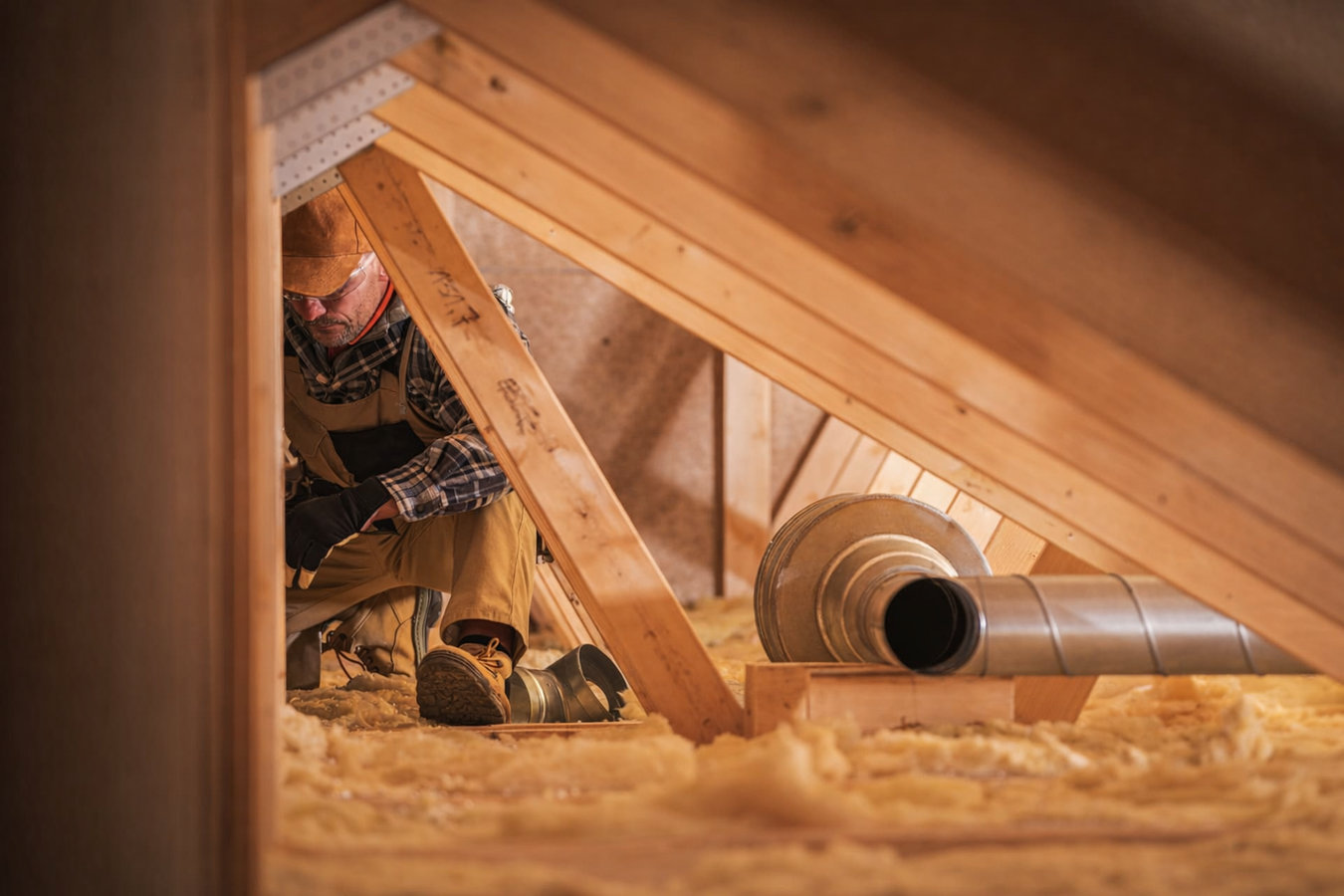
Palm Desert Insulation serves Palm Desert homeowners with attic insulation, spray foam, and whole-home upgrades. We have completed insulation projects across Palm Desert, CA and respond to new requests within 1 business day.
Palm Desert homes built in the 1970s and 1980s were insulated to standards far below what the desert heat demands today. A fullhome insulationassessment covers your attic, walls, and any crawl space to find where heat is getting through and address it in one coordinated project.
In a single-story Palm Desert home with a flat or low-slope roof, the attic is where summer heat enters first and fastest. Upgrading attic insulation is typically the single highest-impact improvement a homeowner here can make toward lower energy bills.
Flat and low-slope roofs - common across Palm Desert neighborhoods built in the 1970s - create a direct heat path from the roof deck into the living space. Spray foam applied to the underside of the roof deck seals and insulates in one step, which is especially effective for this roof type.
Blown-in insulation fills every corner of an attic floor without the gaps that batts develop over time, making it a strong choice for the older fiberglass-batt attics common in Palm Desert's mid-century housing stock. It can be added on top of existing material as long as the old insulation is dry and undamaged.
Palm Desert's dusty seasonal winds push fine particulates through every unsealed gap in an attic or wall assembly. Sealing those gaps before adding insulation keeps the desert air out and lets your insulation perform the way it should - not just on paper but in the summer heat you actually live in.
Palm Desert sits in the Coachella Valley, one of the hottest inhabited regions in the United States. Summer air temperatures regularly exceed 110 degrees Fahrenheit, and attic temperatures in homes without adequate insulation can climb well above 150 degrees on a peak afternoon. That level of heat puts constant pressure on air conditioning systems and on any insulation that is thin, compressed, or aging. A home that was adequately insulated for the standards of the 1980s is almost certainly under-insulated by the demands of today. Most of Palm Desert was built between the 1970s and the 2000s, which means a large share of local homes are in exactly this position - well past the useful life of their original insulation without ever having had an upgrade.
The climate also creates conditions that degrade insulation over time in ways that are specific to desert living. Seasonal dust storms carry fine particulates that infiltrate attic spaces through vents and gaps, compacting loose-fill materials and reducing their performance. Extreme temperature swings between desert nights and afternoons cause framing lumber to expand and contract, which can shift batt insulation out of position in wall cavities over years. Palm Desert also has a high concentration of HOA-governed communities - including many golf course developments and gated subdivisions - where any exterior or attic work may need to meet community-specific requirements alongside California energy code standards. An insulation contractor who works here regularly knows how these factors interact and how to work within them.
Palm Desert Insulation is based at 73950 Alessandro Dr in Palm Desert, and our crew works in this city regularly - pulling assessments on ranch-style and mid-century homes from Sun City Palm Desert to the gated communities along Cook Street on the east side of town. We know the flat-roof construction that defines so much of the local housing stock, and we know that the building permit office at the City of Palm Desert Building and Safety Division is the right first call when a project scope requires documentation before work begins.
El Paseo runs through the center of the city, and the neighborhoods around it represent the full range of Palm Desert housing - from smaller 1970s single-story homes close to Highway 111, to newer resort-style condos and townhomes on the east side toward Indian Wells. The Living Desert Zoo and Gardens sits on the southern edge of the city where residential lots back up against the Santa Rosa Mountains. We serve all of it, from the seasonal second homes that sit empty through the summer to the full-time residences that run their air conditioning for six months straight.
We also work regularly in the communities surrounding Palm Desert. If your neighbors or family are in Rancho Mirage to the west or La Quinta to the southeast, we serve both areas and understand the same Coachella Valley conditions that affect homes throughout the valley.
Reach out by phone or through the contact form and we will respond within 1 business day. We ask a few quick questions about your home - age, type, and what is prompting the call - so we arrive prepared with the right materials and tools for your specific situation.
A technician visits your home to inspect the attic and any other areas of concern. We measure existing insulation levels, check for air leaks around fixtures and pipes, and look for signs of moisture or pest activity. The assessment typically takes 30 to 60 minutes and is free - no cost and no obligation.
After the walkthrough you receive a written estimate explaining what we found, what we recommend, and what the work will cost. We also walk you through any Southern California Edison rebates or federal tax credits your project may qualify for - so you know your real out-of-pocket cost before deciding.
On the work day the crew handles all setup, protective coverings, and cleanup. Most single-story Palm Desert homes are completed in one day. Before we leave, we walk you through what was done and provide written documentation of the final insulation level - which you will need for rebate applications and any future home sale.
We serve Palm Desert homeowners with free on-site assessments, written estimates, and same-crew installation. No call centers. No subcontractors.
(442) 334-1725Palm Desert is one of the larger cities in the Coachella Valley, incorporated in 1973 and located near the geographic center of the valley between Rancho Mirage to the west and Indian Wells to the east. The city grew quickly through the 1970s, 1980s, and 1990s as a retirement and resort destination, and its population is around 54,000 - though that number swells considerably in winter when seasonal residents arrive. A large share of homes are owner-occupied, many by retirees or seasonal residents who return each fall after spending summer away. The El Paseo shopping district, often called the Rodeo Drive of the Desert, serves as the city's commercial and cultural center along with the nearby Westfield shopping areas. Well-known communities like Sun City Palm Desert and the golf course developments around Cook Street give the city its distinctive character as a place that blends active-adult living with resort-style amenities.
The housing stock is almost entirely single-story ranch-style construction with stucco exteriors, flat or low-slope roofs, and concrete slab foundations - all of it built for the desert climate. A significant share of homes sit inside gated communities with HOA governance, particularly around the golf courses. Condos and townhomes make up a notable portion of the overall housing supply, especially in the resort-adjacent complexes built in the 1980s and 1990s that are now reaching the age where major systems need attention. Neighboring Rancho Mirage to the west shares similar upscale resort-oriented housing stock, while Cathedral City to the northwest has a denser, more varied mix of residential properties and a broader age range of homes.
High-performance spray foam that seals and insulates in one application.
Learn moreLoose-fill blown-in insulation for fast, thorough coverage in any space.
Learn moreInsulate your crawl space to prevent moisture and improve efficiency.
Learn moreDense, moisture-resistant closed-cell foam for maximum R-value.
Learn moreLightweight open-cell foam ideal for interior walls and sound control.
Learn moreCommercial-grade insulation for offices, warehouses, and retail spaces.
Learn moreHeavy-duty vapor barriers that protect crawl spaces from ground moisture.
Learn moreProfessional vapor barrier installation for walls, floors, and ceilings.
Learn moreAttic air sealing to stop conditioned air from escaping through the roof.
Learn moreServing these cities and communities.
Palm Desert summers start early and run hard - the sooner your home is properly insulated, the sooner your cooling costs come down. Contact us now and we will respond within 1 business day.